What Are European Cutting Techniques — And Why Do They Matter?

Most people judge a haircut on day one. The real test is week six, when the shape either holds or falls apart. That's where European cutting techniques earn their reputation.
These aren't gimmicks or marketing language. They're a specific set of methods that prioritize how hair moves, where the weight sits, and how the cut behaves as the hair grows. Once you understand what's actually happening, you'll know exactly what to ask for.
Point Cutting: Getting Rid of the Hard Line
Picture cutting fabric with scissors straight across versus using tiny angled snips along the edge. The second approach gives you a softer, feathered result. Point cutting works the same way.
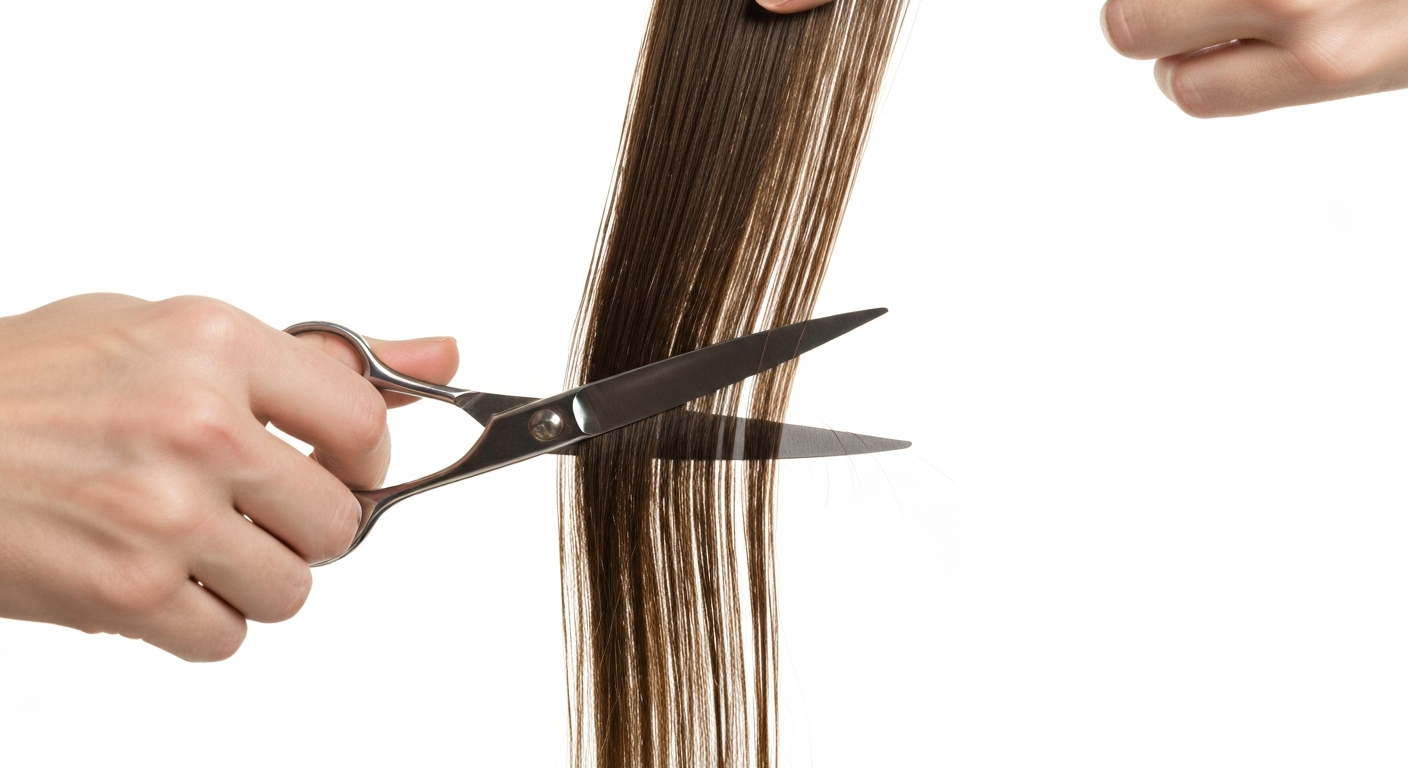
Instead of cutting straight across a section, the stylist holds the hair up and uses the tips of the shears to cut into the ends at an angle. Weight comes out without leaving a harsh line, so the hair falls more naturally. For thick hair, it diffuses bulk and takes away that heavy, helmet-like shape. For fine hair, the textured ends create the appearance of more body.
The practical benefit: as your hair grows, the softened ends blend into the new length rather than creating a blunt shelf that screams "I need a trim."
Slide Cutting: How Layers Actually Blend
Slide cutting is what separates a cut that flows from one that looks like someone stacked bricks. The shears are held partially open and drawn down the length of a section, removing different amounts of hair at different points along the strand. It's a sculpting motion, not a chopping one.
This is the technique behind long, soft layers that seem to melt into the rest of the hair. There are no visible steps or lines, just movement. It's also what creates softness around the face without the layers looking choppy or dated.
When this is done well, you can grow the cut out for months and it still looks intentional. The fluid layers adapt as length increases. Compare that to blunt layers, which tend to develop a hard "shelf" the moment they grow past their original point.
Razor Cutting: Soft Texture, Not Damage
Razor cutting has a bad reputation in some circles, usually because it's been done poorly with a dull blade on the wrong hair type. Done correctly by someone who knows what they're doing, it produces some of the most natural-looking texture available.
A sharp styling razor cuts the hair at an angle, so the ends are tapered rather than blunt. The result is a softer, lighter feel, especially useful for medium to coarse hair that needs the ends thinned out. It suits styles that are meant to look lived-in rather than precise.
The grow-out is forgiving because the ends are already tapered. There's no single line that breaks down; the hair transitions gradually, which means more weeks between cuts before anything starts looking off.
Working With the Hair, Not Against It
What ties all of these techniques together is the starting point: reading the hair before touching it.
Hair has opinions. It grows in different directions, has cowlicks, springs back at different rates, and behaves differently depending on density and texture. A stylist who ignores all of that and cuts the same way on every head is going to produce results that only look good fresh from the salon.
Before picking up shears, a good stylist maps out where the hair naturally parts, where it wants to sit, and how individual sections move. Then the cut is built around those patterns instead of fighting them. That's why a well-executed European cut is easier to style at home. The hair is already inclined to do what the cut asks of it.
Why Blunt Cuts Grow Out Faster
A blunt cut creates a strong, defined line. That precision is exactly what makes certain styles striking. It's also exactly why the style deteriorates quickly. The moment growth starts, that line shifts, the weight distribution changes, and the shape starts to go.
European techniques distribute weight differently. There's no single structural line that everything depends on. Instead, the shape is built from softened ends, blended layers, and sections that work with the hair's natural movement. Growth becomes part of the cut's evolution rather than its undoing.
The result is a haircut that looks good today and still looks considered eight weeks from now.
At European Hair Design, this is how we approach every cut. Our stylists work with your hair's actual texture, density, and growth patterns to build something that suits you specifically and holds up over time.
Ready to see the difference? Come visit us at European Hair Design, 2116 Pembina Hwy, Winnipeg. We'd love to show you what your hair is actually capable of.